GRACIAS!
VUELVA
PRONTOS!

#include <WiFi.h>
#include <WebServer.h>
#include <ESP32Servo.h>

// Configuración de la red WiFi
const char* ssid = "AQUÍ ESCRIBE EL NOMBRE DE TU RED WIFI";
const char* password = "Y ACÁ TU CONTRASEÑA";

Servo myServo;
int servoPin = 14; // Cámbialo si conectaste tu servo a otro pin

// Servidor web en el puerto 80
WebServer server(80);

// Función que se ejecuta cuando llega el webhook
void handleMover() {
    Serial.println("Webhook recibido: moviendo servo...");
    myServo.write(180); // Mueve el servo a 180°
    delay(2000);        // Mantiene la posición 2 segundos
    myServo.write(0);   // Regresa a 0°
    server.send(200, "text/plain", "Servo movido");
}

// Página principal
void handleRoot() {
    server.send(200, "text/plain",
                "Servidor ESP32 activo. Usa /mover para accionar el servo.");
}

void setup() {
    Serial.begin(115200);

    // Conectar a la red WiFi
    WiFi.begin(ssid, password);
    Serial.print("Conectando a WiFi...");

    while (WiFi.status() != WL_CONNECTED) {
        delay(500);
        Serial.print(".");
    }

    Serial.println("\nConectado a WiFi!");
    Serial.print("IP del ESP32: ");
    Serial.println(WiFi.localIP());

    // Inicializar el servo
    myServo.attach(servoPin);
    myServo.write(0);

    // Configurar las rutas del servidor
    server.on("/", handleRoot);
    server.on("/mover", handleMover);

    // Iniciar el servidor web
    server.begin();
    Serial.println("Servidor HTTP iniciado");
}

void loop() {
    server.handleClient();
}

*Nota importante

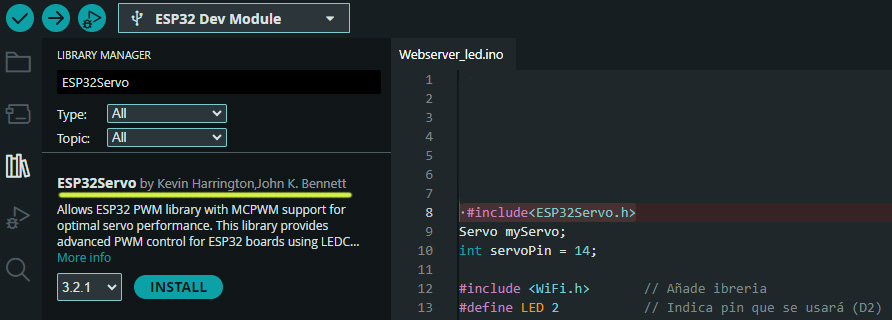
Para que el código funcione debes instalar la librería ESP32Servo, sólo búscala en el Library Manager de tu Arduino IDE

copia y pega en tu IDE preferido, compila y a darle átomos!